Disguise guide: building a face that fits
The operating room changes age, hairstyle, nose, eye colour and more, across over 900 million combinations. The face is an output, not an input: finish the dossier pass, describe the face in one sentence, then set the features the documents actually prove.
The operating room is where Legion Was Here stops being a reading game and becomes a matching game. You are not designing a face, you are reconstructing one: the face of whoever your target trusts, assembled from whatever the dossier proves.
Get it right and you can approach the target. Get it subtly wrong and you walk into a conversation wearing the wrong person's history.
What the operating room lets you change
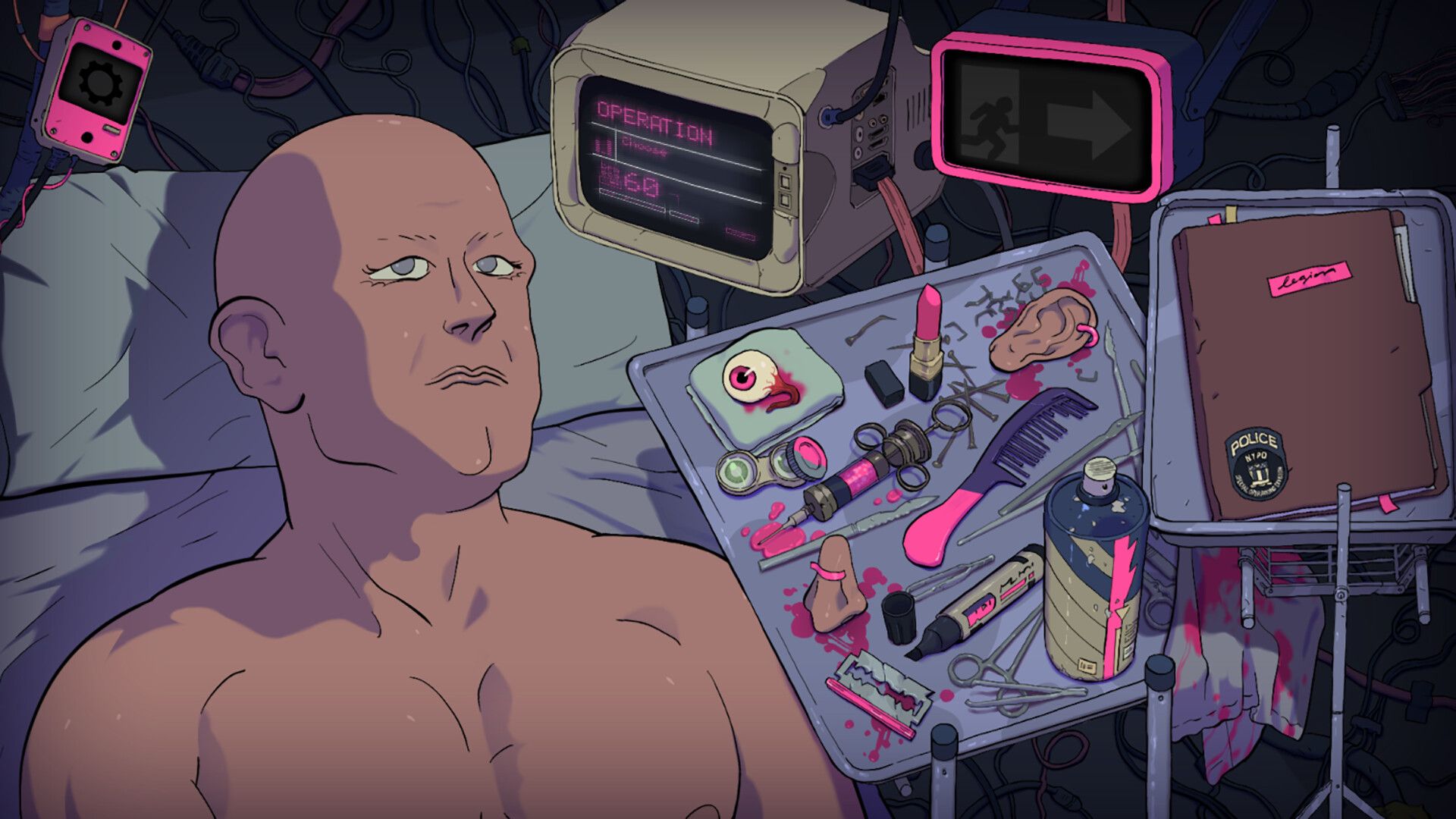
The developer's own description of the game lists age, hairstyle, nose and eye colour, and sums the rest up as everything can be changed. The number of possible results is over 900 million combinations.
In practice that number is not the problem. Hundreds of millions of combinations sounds like a long search, but the dossier narrows it to a handful of plausible faces. The combinations exist so the game can always express the exact person the documents describe, not so you have to hunt.
The face you are building is somebody else's
Each mission provides a file detailing your new identity, and the point of cross-referencing it is to arrive at the appearance that identity actually has. The controls are an output, not an input: you decide the face from the evidence, then produce it. Players who open the room first tend to arrive at a face they like rather than the face they need.
- Finish the dossier pass and write the physical description in one sentence.
- Note which features the documents actually fix — age, hairstyle, eye colour, nose — and which they only sketch.
- Only then open the room, and set the fixed features first.
- Let the photograph referee anything the text leaves vague.
The dossier guide covers step one properly, and the demo walkthrough shows how this plays out in the mission you can actually try today.
Start with the features the file proves
Rough priority order that holds up across missions:
| Feature | Why it matters | How the file fixes it |
|---|---|---|
| Age | Changes the whole face, and conversations test it | Dates, birthdays, how others describe the person |
| Hairstyle | The most visible feature in a photograph | Costume or ID photographs, usually explicit |
| Eye colour | Easy to get wrong, hard to notice | Often buried in a description rather than shown |
| Nose | The main shape difference between similar faces | Photograph comparison, and the anatomical diagram |
| Everything else | Fills the gap once the above are locked | Inference from build, posture, wording |
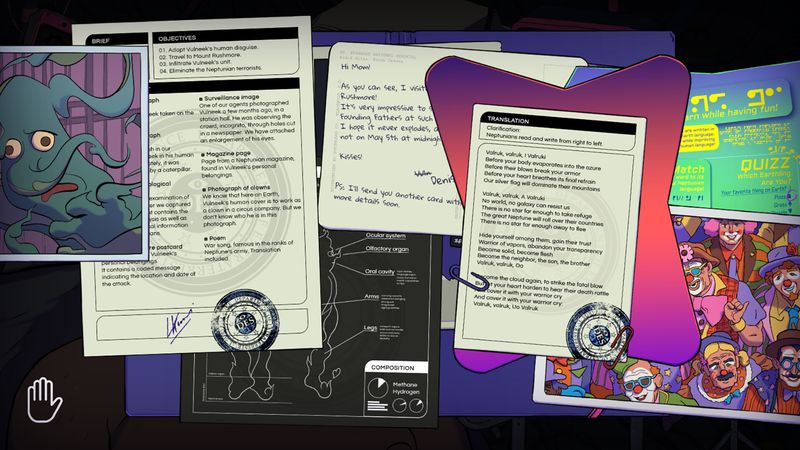
Two cautions. The anatomical diagram labels parts of the body, which makes it look like a key to the operating room's controls when it is really a key to what the documents describe. And the game plants misleading material on purpose — the developer enjoyed watching streamers struggle with the fake clues he built into the demo. A feature only one document supports is a feature worth doubting.
Getting to a full match
Missions can be replayed to improve your score, and the developer's description of the game is blunt about the target: as long as you have not reached 100 percent, you were not totally credible.
Reaching it is mostly a discipline problem rather than a knowledge problem:
- Replay and change one variable at a time, so you can see which feature the score is counting.
- Re-read the personal documents. Costume photographs and translated poems carry details the forms do not.
- Check your left-hand notes: they carry into the conversation, so a missing feature often shows up as a wrong answer rather than a wrong pixel.
- Do not assume a penalty is your fault. Version 0.5.3.6 fixed an incorrect answer in the Neptunian mission's infiltration phase.
What comes after the room
Having the right face only gets you into the room. The mission continues into a conversation phase built on visual novel mechanics, where you have to act in accordance with your new identity to gain the target's trust.
The developer's press material is explicit that suspicion replaces the traditional detection meter. That is the real difficulty curve of the game: the operating room is checkable, the conversation is not, and a forgotten relationship or the wrong personal detail ends the disguise.
FAQ
How many faces can I make?
Over 900 million combinations across age, hairstyle, nose, eye colour and the rest. It is the developer's figure, not a community estimate.
Can I change my face mid-mission?
The operating room is the transformation phase, and the file you are issued defines the identity you build toward. Replaying lets you rebuild from the start.
What happens if my disguise is wrong?
You are not always told. A near-match can still get you into the conversation, where the failure shows up as suspicion rather than an error message.
Do I need the operating room if I have the photograph?
For every mission that requires an identity. The photograph tells you the answer; the room submits it.